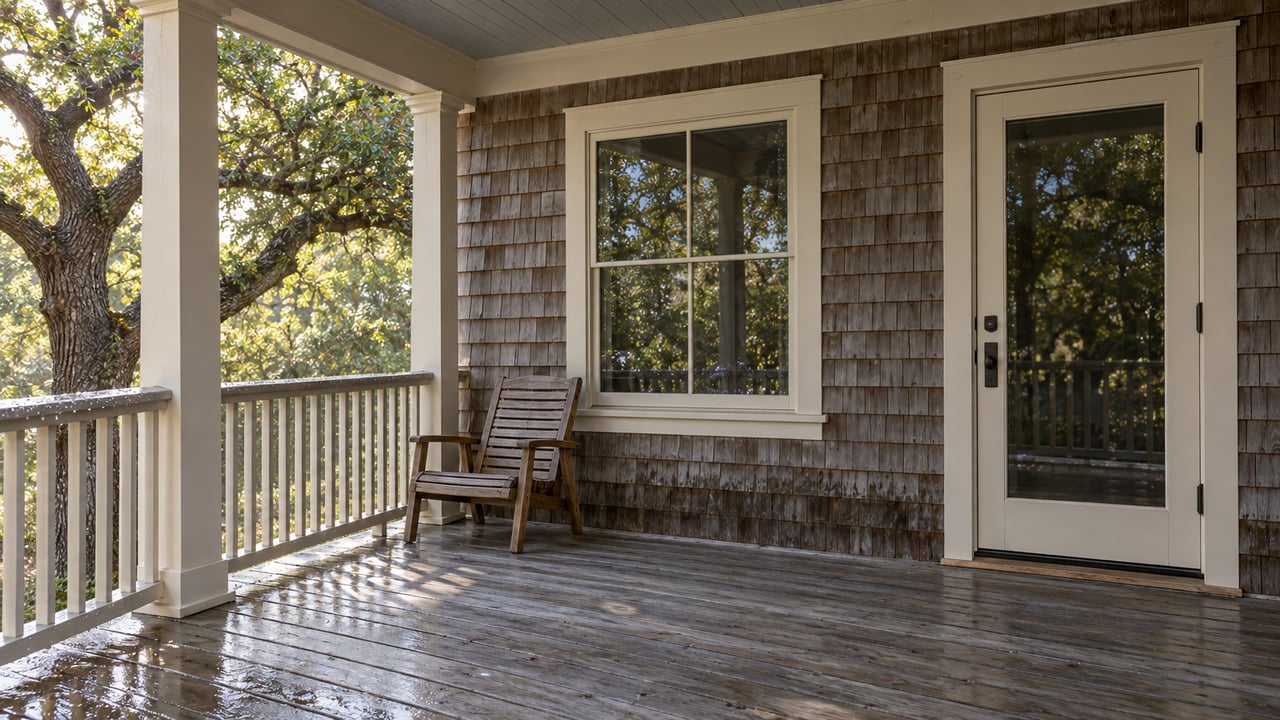
Bald Head Woods Reserve covers 191 acres of maritime forest. The state manages it as an outdoor laboratory for research, education and compatible recreation, and North Carolina's Department of Environmental Quality points to its very old, very large live oaks and laurel oaks. Four trails run through it, and you reach them from golf cart parking areas and trailheads along Federal Road. This October, one side of that trail system has been closed because of a nest in the ground.
The Village of Bald Head Island's parks page carries the notice in bold, under the heading "Temporary Closure of the North Side (Creek Side) Bald Head Woods Reserve Trail." The insects are native, they are at the most defensive point of their year, and the land belongs to the state. Put together, that means the season will probably close out this nest before anyone else does.
What Is Closed, and What Is Still Open
The Village notice says "both entrance points of the creek side of the Bald Head Woods Reserve trail are closed for the public's safety," and that "the south side of the trail remains open to the public." It also says the Village's Public Works Department is working to get rid of the nest. If those first efforts fail, the Village may ask NC Coastal Reserve staff for help, since the property is state-owned and state-managed.
Here is how the state describes the trail system:
| Trail | Length | State difficulty rating |
|---|---|---|
| Loop Trail | 0.4 mile | Easy |
| Middle Trail | 0.8 mile | Easy |
| East Trail | 0.5 mile | Easy to moderate |
| Creek Trail | 0.7 mile | Easy to moderate |
There are three parking decks: one at the head of Loop Trail, one at the foot of Middle Trail and one at the head of Creek Trail. The state already describes these trails as primitive and uneven, and it lists seasonal biting insects and poison ivy among the usual hazards. The closure notice is a live page, so check it before you park at a creek-side trailhead this week.
Spraying Moved the Nest Instead of Ending It
The Wilmington StarNews covered the closure on October 17. According to the StarNews report, Village officials heard in early October that aggressive wasps were harassing people and pets along part of the reserve trail. They closed that section and set out to identify the insect. Researchers with the Bald Head Island Conservancy and the North Carolina Department of Agriculture and Consumer Services identified the wasps as native Southern yellow jackets. This species can turn aggressive when its ground nest is disturbed, and StarNews reported that this appears to be what happened.
The same article explains why the fix has been slow. Village spokesperson Carin Faulkner told the paper that crews sprayed the nest several times, which only moved the wasps a little farther down the trail. Because the trail sits on state property, the N.C. Division of Coastal Management is also involved. Its spokesperson, Christy Simmons, told StarNews that reserve staff are coordinating with the Village on visitor safety, and added: "Because the insects have been confirmed as a native species, there was not an invasive-species removal effort."
Confirming the species as native changed the response. The Village's own notice still calls it "an invasive yellow jacket nest." StarNews reported that this early label caused some confusion. Once the experts confirmed a native species, the job became a safety problem on a protected forest trail, handled through ordinary nest control and a closure. It was never going to get the full-scale eradication response used for invaders. The state's Coastal Reserve rules also require that the natural character of the reserve be maintained, and they prohibit disturbing or removing live animals or vegetation unless it is part of a research or educational project the Division of Coastal Management has authorized.
Why October Is the Worst Month, and What Usually Ends It
The timing makes sense once you look at a yellow jacket colony's year. North Carolina State Extension's yellowjacket factsheet, revised October 14, 2026, notes that yellowjacket nests are underground. When a nest is disturbed, the workers can swarm aggressively. According to University of Maryland Extension, social wasp colonies grow all summer and are largest in late summer or early autumn. Workers can become more agitated and defensive of their nests from late summer into autumn. A nest bothering trail users in the first half of October is about what that cycle would predict.
The same extension account describes how the year ends. Freezing weather stops whatever nest activity is left. The workers and the queen that started the nest in spring die, and only young mated queens survive the winter. They do not reuse the old nest.
For the creek side of Bald Head Woods, that means the colony has a built-in end date that no spray crew controls. The nest causing trouble this month will not be the one in use next spring. The reopening, though, is still up to the Village and the Coastal Reserve, and the parks page is where that decision will show up.
The Wasp Behind the Early Confusion
The "invasive" label caught on partly because North Carolina has a real invasive hornet to watch for this year. StarNews reported that the yellow-legged hornet, first found near Savannah, Georgia, in 2023, was confirmed as established in North Carolina in late July 2026, near Charlotte. Dr. Greg Wiggins, biological control administrator with the N.C. Department of Agriculture, told the paper that another nest turned up in the Harrisburg area on October 12. The NCDA&CS yellow-legged hornet page says that, as of August 2026, the hornet had been detected in Union and Guilford counties. StarNews added that Clemson University's tracking program had not recorded any nests farther north than the Charleston area along the South Carolina coast.
The two insects are easy to tell apart once you know where to look:
| Southern yellow jacket | Yellow-legged hornet | |
|---|---|---|
| Status | Native to North Carolina | Invasive, native to Southeast Asia |
| Where it nests | In the ground | Late-season nests usually 33 feet or more up in trees |
| Look | Queens have orange-yellow abdomens with sparse black markings | About an inch long, dark thorax, abdomen lightening toward the tip, yellow lower legs |
| Main concern | Defensive swarming when a ground nest is disturbed | Preys on honey bees and native insects |
The Bald Head Woods nest is in the ground, which fits the native species and not the invader. If you do spot what looks like a yellow-legged hornet, NCDA&CS asks you to submit a photo through its online reporting tool. Include a quarter or a pen for scale, along with the location, the date and your contact information. The department also says monitoring traps can run until the first fall frost.
Where to Walk While the Creek Side Is Closed
The simplest option is the rest of the reserve, since the Village says the south side of the trail is still open. The state's visitor information for Bald Head Woods Reserve still applies there: pets on a leash, and no fires, camping, or removing plants, animals or fungi.
Outside the reserve, the Village describes Whale Head Park in Cape Fear Station as a passive park with a short wooded walking trail, benches and a pergola. The Conservancy's Middle Island Exploration tour is a guided option with moderate walking. It requires advance booking, and participants drive their own golf carts to the Conservancy meeting point. On November 28 at 8:30 a.m., the Conservancy's Turtle Trot 5K runs through the island's maritime forest and dunes. Registration includes a themed shirt, and medals go to age-group winners.
The Kent Mitchell Nature Trail is a different case. At its September 23 meeting, Village Council heard that Bald Head Island Limited plans to transfer the trail property to the Village for $1. The Village attorney is resolving a technical problem in the deed history involving state-owned wetlands. The trail's boardwalk sections need about $48,000 in repairs. Council expressed strong support for restoring the boardwalk and wants legal protections that keep the land a nature trail permanently. For now, think of Kent Mitchell as a trail between owners rather than a ready alternative. Its next chapter will come out of Council's off-season park planning.
Bald Head Island's protected forests are a big part of why its neighborhoods look and feel the way they do. Who manages each tract, the state or the Village, shapes how those places change over time. If you own near the Bald Head Woods Reserve or are weighing a home near the island's preserved land, David Wray can walk you through how that land shapes the homes around it. Request a private consultation with David & Suzanne Wray.
