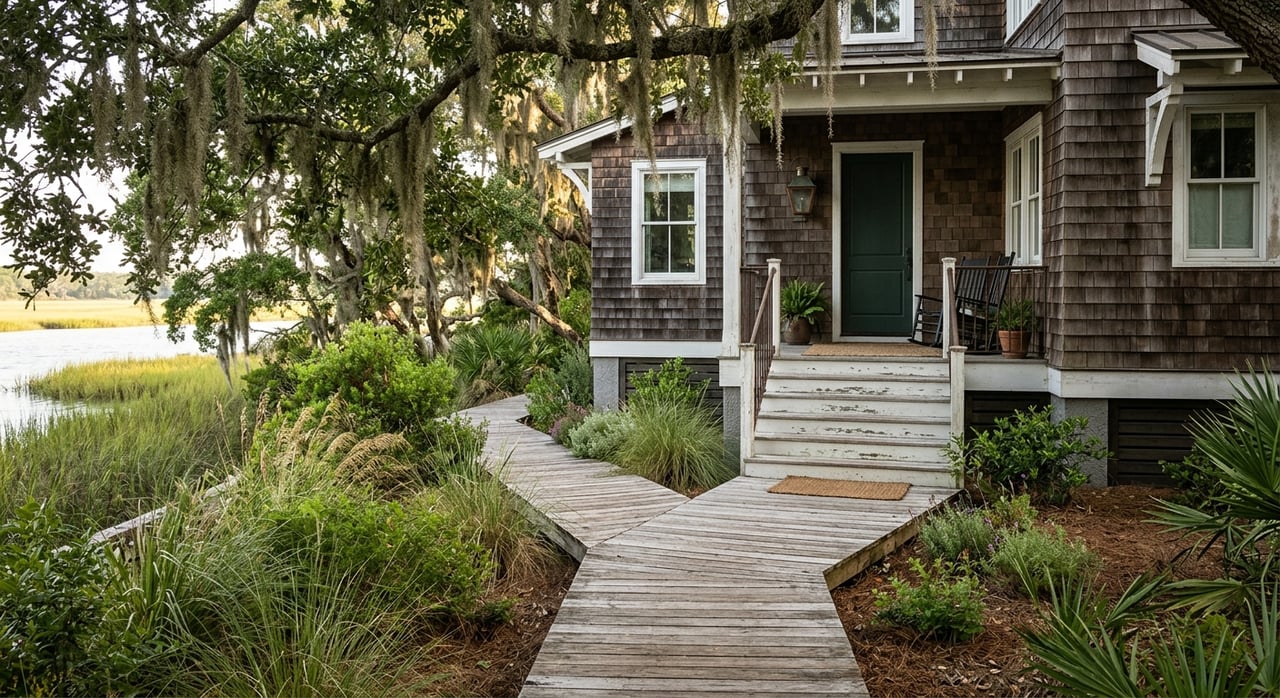
What does it really mean to live close to nature on Bald Head Island? It means the landscape is not just a backdrop to daily life. It shapes how you move, how you care for your home, and how you share space with wildlife. If you are considering a home here, understanding that relationship can help you make a more confident decision. Let’s dive in.
Nature Shapes Life on Bald Head Island
Bald Head Island sits at the southern tip of North Carolina, where the Cape Fear River meets the Atlantic Ocean. The Village describes it as a fragile barrier island made up of four ecosystems: beachfront, dune ridge, maritime forest, and marsh. That mix gives the island its distinctive feel and also explains why stewardship is part of everyday life.
For you as a buyer or owner, this means the natural setting is woven into the ownership experience. The beaches, dunes, forest, and marsh are not separate amenities. They are living systems that influence the island’s rules, routines, and long-term appeal.
Four Ecosystems Define the Setting
Beachfront and Dunes
The beachfront offers open shoreline views and direct access to the Atlantic, but the dunes do important work beyond scenery. The Village says dunes are the first line of defense from storms and hurricanes. Native vegetation also helps reduce erosion and storm impacts.
That is why dunes are off-limits and why beach activity is regulated. If you own near the shore, you are living beside a protective system that supports the island’s resilience.
Maritime Forest
In the middle of the island, Bald Head Woods Reserve adds a very different landscape. NC DEQ says this 191-acre Coastal Reserve site is characterized by extremely old live oaks and was formally recognized as an old-growth forest in 2025.
This is one of the features that makes Bald Head Island feel more layered than many coastal communities. You are not just near the beach. You are also near a rare forest environment that brings shade, habitat, and a strong sense of place.
Marsh Habitat
The marsh adds another side of island life, with tidal landscapes and wildlife activity that changes with the seasons. Together with the beach, dunes, and forest, it helps create a setting where nature is visible almost everywhere you go.
For many buyers, that is a major part of the draw. It offers a coastal experience that feels preserved and connected to the land rather than built around it.
Conservation Is Part of the Island’s Identity
Bald Head Island is not simply scenic. It is also a place where conservation plays a central role. Bald Head Island Conservancy says its goal is to develop science-based management strategies for living in harmony within barrier-island environments, using the island as a field station for research across beach, dune, salt marsh, maritime forest, and freshwater pond systems.
That ongoing work matters if you value a community with a clear commitment to preservation. It also helps explain why island policies often focus on long-term environmental balance.
The Smith Island Land Trust, which serves as the Conservancy’s preservation arm, says the Smith Island Complex contains one of the largest and best examples of natural Maritime Evergreen Forest. More than 100 acres have been preserved, and CTNC adds that it protects 31 properties on the island.
The island also carries notable conservation designations. The North Carolina Natural Heritage Program has designated it as a site of national significance, and Audubon recognizes it as a Global Important Bird Area. Those designations reflect the ecological value that many residents appreciate from day one.
Wildlife Is Part of Daily Life
On Bald Head Island, wildlife sightings are normal, not unusual. Commonly discussed wildlife includes sea turtles, shorebirds, songbirds, wading birds, birds of prey, white-tailed deer, alligators, and coyotes.
If you are moving from a more conventional neighborhood, this can feel like a big shift. Here, the island is treated as shared habitat, and that comes with clear expectations for how you live alongside animals.
Birdlife Stands Out
For nature-minded owners, birdlife is one of the island’s defining features. The Conservancy says Bald Head Island is home to a wide variety of shorebirds, songbirds, wading birds, and birds of prey. Audubon’s Global Important Bird Area recognition adds another layer to that story.
This can shape your experience in subtle but meaningful ways. A morning walk, a golf cart ride, or time on a porch may come with regular wildlife observation built into the day.
Deer, Alligators, and Coyotes
The Village reports a deer density of 74 deer per square mile, above Brunswick County’s 20 and above the recommended barrier-island level of less than 50. The Village also says the island is about 60 percent built out and that available deer habitat decreased 4.7% between 2016 and 2024.
Freshwater ponds and lagoons are also active wildlife areas. The Village says alligators are frequent in these areas, and fishing and swimming are prohibited there because of alligator habitat. Coyotes have been documented on the island since 2007.
These facts do not make island living less appealing, but they do make it more specific. You are choosing a place where awareness and good habits matter.
Sea Turtle Stewardship Affects Everyday Routines
Sea turtle protection is one of the clearest examples of how nature influences life on Bald Head Island. The Village describes the island as a Sea Turtle Sanctuary, and the Conservancy says turtle protection efforts date to 1980. Bald Head Island is also a National Marine Fisheries Service index beach.
For owners and guests, turtle season comes with practical rules. Bald Head Association says sea turtle season runs from May 1 through November 15, while the Village’s beach light restriction applies from May 1 through October 31.
What Owners Need to Know
Beach behavior is carefully managed during the year, especially during turtle season. Village ordinance requires beach equipment to be removed from the beach between 9:00 p.m. and 8:00 a.m. year-round. Equipment must also stay at least 10 feet from sea turtle nests or dune vegetation.
From May 1 through October 31, only red light is allowed on the beach. The Village also says ocean-facing windows should have shades or blinds closed at night and beach-facing outdoor lights turned off.
If you have dogs, there are seasonal rules to know as well. During turtle season, dogs on the beach must be physically restrained from sunset to sunrise.
These are not small details. They are part of living responsibly in a coastal environment where wildlife protection is built into the community’s daily rhythm.
Car-Free Living Changes the Pace
One of the most distinctive parts of Bald Head Island life is how you get around. The island is accessed by ferry from Deep Point Marina in Southport, and cars are not allowed on the island. People move around by golf cart, bicycle, and walking.
The Village also prohibits gas-powered golf carts and ATVs on Village streets. Taken together, ferry access, car-free streets, and wildlife-oriented rules suggest a quieter and more deliberate daily rhythm than you might find in a typical coastal subdivision.
For many buyers, that slower pace is a major advantage. It can make the island feel more peaceful and more connected to its surroundings.
Ownership Means Stewardship at Home
Living close to nature does not stop at the property line. The Village asks residents to secure trash, reduce clutter, and avoid leaving food sources overnight because wildlife scavenges around homes.
The Village also advises owners to keep pets controlled, close crawl spaces, and put trash out in the morning rather than overnight. These habits help reduce wildlife conflicts and support the island’s shared habitat approach.
This is an important part of the ownership tradeoff to understand. The protected setting offers unusual quiet, wildlife access, and preserved landscapes, but it also comes with rules and responsibilities that become part of normal life.
What Buyers Should Weigh
If you are considering a home on Bald Head Island, the appeal is easy to see. You have a rare combination of beachfront, marsh, dunes, and old-growth maritime forest, along with a car-free environment and a strong conservation ethic.
At the same time, this is a place where the natural setting shapes ownership in practical ways. Lighting limits, beach equipment rules, wildlife boundaries, ferry access, and transportation constraints are all part of the experience.
For the right buyer, those are not drawbacks. They are often the very reasons the island feels special. When you understand the balance between beauty and stewardship, you are better prepared to decide whether Bald Head Island fits the way you want to live.
If you are exploring Bald Head Island or comparing coastal ownership options, working with a trusted advisor can help you sort through the lifestyle details that matter most. For a private consultation, connect with David Wray.
FAQs
What does living close to nature on Bald Head Island actually mean?
- It means you live within a protected barrier-island environment shaped by four ecosystems: beachfront, dune ridge, maritime forest, and marsh, with daily routines influenced by conservation and wildlife rules.
What wildlife should homeowners expect on Bald Head Island?
- Homeowners may regularly encounter sea turtles, shorebirds, songbirds, wading birds, birds of prey, white-tailed deer, alligators, and coyotes, depending on the season and location.
What are the sea turtle season rules on Bald Head Island?
- Sea turtle season runs from May 1 through November 15, and related rules include nighttime beach lighting limits, beach gear removal requirements, and dog restrictions from sunset to sunrise during turtle season.
How do people get around on Bald Head Island?
- Bald Head Island is accessed by ferry from Deep Point Marina in Southport, and people get around the island by golf cart, bicycle, and walking because cars are not allowed.
What should homeowners do to reduce wildlife issues on Bald Head Island?
- Homeowners should secure trash, reduce outdoor clutter, avoid leaving food sources overnight, keep pets controlled, close crawl spaces, and put trash out in the morning rather than overnight.
Why are dunes protected on Bald Head Island?
- The Village says dunes are the island’s first line of defense from storms and hurricanes, and native vegetation helps reduce erosion and storm impacts.
