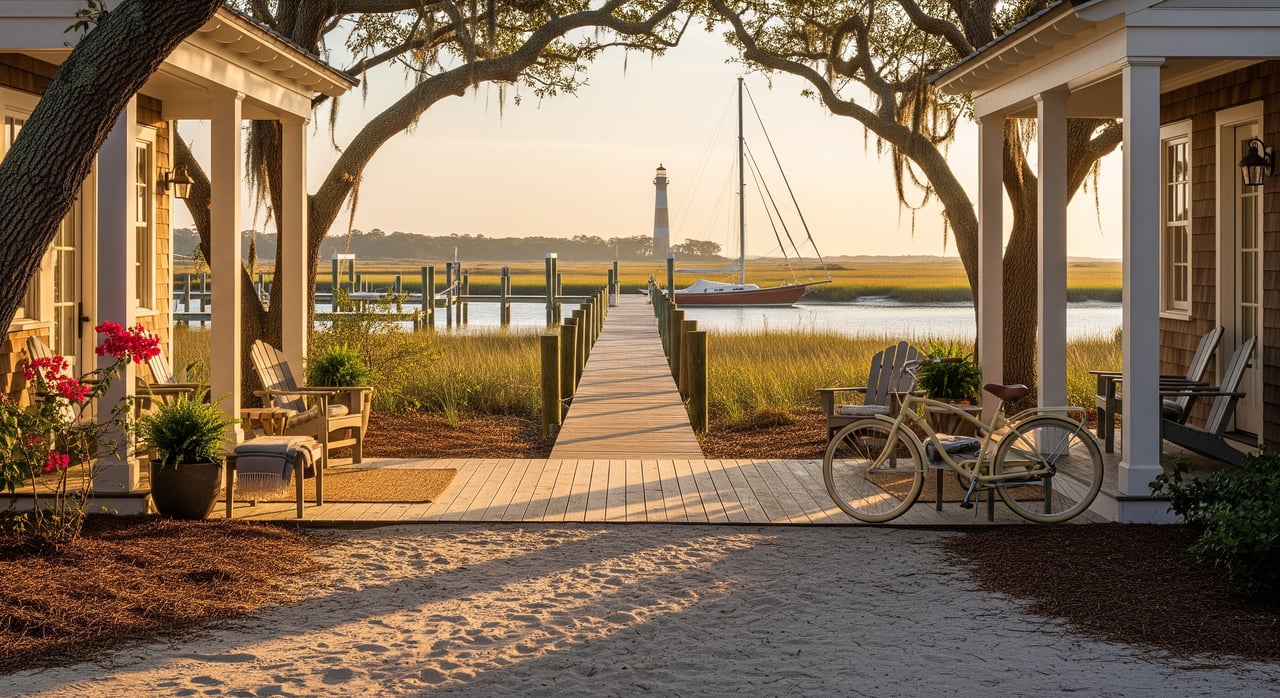
Imagine waking up where the sound of waves replaces traffic, and your daily ride is a golf cart or bicycle. If you are curious how life works without cars on Bald Head Island, you are not alone. You may be wondering how you get groceries, make doctor visits, or plan for rainy days and holidays. This guide gives you a clear picture of daily living, from getting around to handling deliveries and planning for seasons. Let’s dive in.
Why car-free life works here
Bald Head Island does not use private passenger cars. You get around by golf cart, bike, or on foot. Limited service vehicles support operations, safety, and municipal needs. The result is a quieter, slower rhythm that many residents value.
If you plan to move or buy a second home, confirm current rules for golf carts and on-island travel with local village ordinances or management groups. Policies can vary and may change seasonally.
Getting to and from the island
You reach the island by water. Most residents and visitors use the public ferry, while some arrive by private boat. There is no bridge access. Because water access drives everything, you plan your week around ferry times, capacity, and weather.
During peak seasons and holidays, demand rises. Build extra time into your trips and consider earlier ferries for same-day returns. For the latest schedules, fares, parking, bike policies, and weather impacts, verify with the ferry operator before you travel.
Golf carts for everyday trips
Golf carts are the daily vehicle for most households. You use them for grocery runs, beach time, and moving kids and pets around the island. Think through size, seating, and storage. Some owners add a towing or utility cart for projects.
Safety and rules matter. Speed limits, lighting for night driving, and possible age restrictions can apply. Confirm registration and operating rules with local ordinances before you buy or rent.
Biking and walking
Bikes and walking are part of the island routine. You will find paths in developed areas, though coverage can vary by neighborhood. For short trips to the harbor area, a café, or a nearby beach access, biking or walking is often the easiest choice.
Plan around the ferry
Routine mainland errands take planning. Groceries, medical appointments, school needs, and larger supply runs depend on ferry frequency and operating hours. Many residents batch errands into one mainland day to make the most of each trip.
Weather can shift plans. High winds, fog, and storms may delay or cancel service. Keep a flexible schedule, watch forecasts, and maintain a small buffer of essentials at home.
Groceries and dining
You can handle daily essentials at a small island market and enjoy local restaurants or cafés, which often expand hours in peak season. For large or specialty shopping, you will make mainland runs on a weekly or biweekly basis.
If you stay for extended periods, stock bulk staples and rotate fresh items with each ferry trip. Expect seasonal variations in dining hours and menus.
Packages, mail, and freight
Mail service is supported on the island, and package delivery from common carriers is typical, though procedures can be island specific. Many residents coordinate drop-off times to avoid missed deliveries.
Large deliveries like furniture, appliances, or construction materials need coordination. Freight services work with the ferry operator and may require additional fees and lead time. Plan early, especially during busy seasons.
Home services and contractors
Landscaping, pool care, cleaning, and routine repairs are available through local providers or contractors who travel to the island. Work is often scheduled around freight slots and weather.
If you are planning a renovation or new build, follow island permitting and inspection processes. Contractors will need to arrange transport and staging for equipment and materials.
Medical care and emergencies
On-island medical care may be limited to basic or urgent needs. Most residents travel to the mainland for routine and specialty care. Build appointments around ferry times and give yourself a cushion for weather changes.
In an emergency, island services coordinate with county and regional providers. Depending on the situation, transport can involve ambulance, boat or ferry, and air evacuation. If you are considering a move, confirm EMS protocols, response times, and hospital transport options.
Utilities, trash, and recycling
The island has electric, water, and sewer services. Trash and recycling follow scheduled collection. Check local rules for bulk items and special disposal.
Coastal weather can affect utility reliability. Some homes use backup generators for peace of mind, especially during storm season.
School and family logistics
If you plan a long-term stay with children, your school plan may involve mainland districts, private options, or on-island programs. Confirm enrollment, curricula, and transportation directly with the relevant schools and local authorities.
Weather and seasons
Summer and holidays bring more visitors, longer business hours, and fuller ferry schedules. The island feels more active and services expand. Off-season life is quieter, with reduced hours and sometimes less frequent ferries.
Hurricane season calls for readiness. Follow local evacuation guidance, plan mainland shelter options, and keep essential supplies on hand.
A typical day
Morning often starts with a short golf cart ride or bike to the harbor area, a café, or a beach walk. You might run a small errand at the island market or plan a mainland trip around the next ferry.
Work-from-home is common. Confirm high-speed internet availability and service tiers when you evaluate a property. Contractors, landscapers, and pool techs often schedule work around ferry freight timing.
Leisure is a daily priority. Beaches, walking paths, and programs run by local environmental groups connect you to nature and community rhythms.
Costs and tradeoffs
Expect higher logistics costs. Freight fees, delivery surcharges, and premium pricing for some items are common. Golf cart ownership adds purchase, maintenance, charging, and registration costs. Contractors may charge more due to transport and staging.
The payoff is a low-traffic environment and a slower pace. For many, the tradeoffs feel worth it once routines are set.
Second-home vs. full-time living
Second-home owners often stock essentials, use local services, and rely on managers for guest logistics and maintenance. If you own a vacation rental, a property manager can handle check-ins and supplies.
Year-round residents build a stronger ferry routine for groceries, medical care, and work needs. With a good plan, daily life can be smooth in every season.
Accessibility and safety
If you have mobility needs, the absence of cars can be challenging. Electric golf carts and ADA-compatible resources can help, but you should verify options and medical transport details before you commit.
Know local safety rules. Follow golf cart guidelines on lighting and speed, use helmets if required, and respect beach and dune protections. Learn about coastal hazards like rip currents and storm surge from local resources.
Is island life a fit for you?
If you enjoy planning your week around ferry times, prefer quiet streets, and like being outdoors, Bald Head Island’s car-free lifestyle can be a strong match. The key is to build reliable routines for groceries, deliveries, medical care, and weather. With that foundation, daily life becomes simple and rewarding.
When you are ready to talk next steps for a second home or to align your move with your broader real estate goals, schedule a private conversation with David Wray. We will help you think through timing, ownership options, and the service network you need for a smooth experience.
FAQs
How do Bald Head Island residents handle weekly groceries?
- Most buy daily essentials at the island market and plan larger mainland supermarket runs weekly or biweekly around ferry times.
How are furniture and large appliances delivered to homes?
- Large items move via coordinated freight services that work with the ferry operator, often with added fees and longer lead times.
What happens if there is a medical emergency on the island?
- Island EMS coordinates with county and regional providers. Depending on severity, transport may involve ambulance, boat or ferry, or air evacuation.
Is it realistic to live on Bald Head Island year-round?
- Yes. Plan for ferry-dependent logistics, full medical and school needs on the mainland, and remote work capability if needed.
Can visitors and new residents rent golf carts?
- Yes. Short-term golf cart rentals are common, with rules and availability that vary by season. Confirm details before arrival.
How are trash and recycling managed for homeowners?
- Regular collection services operate on the island. Check local schedules and any rules for bulk or special disposal.
